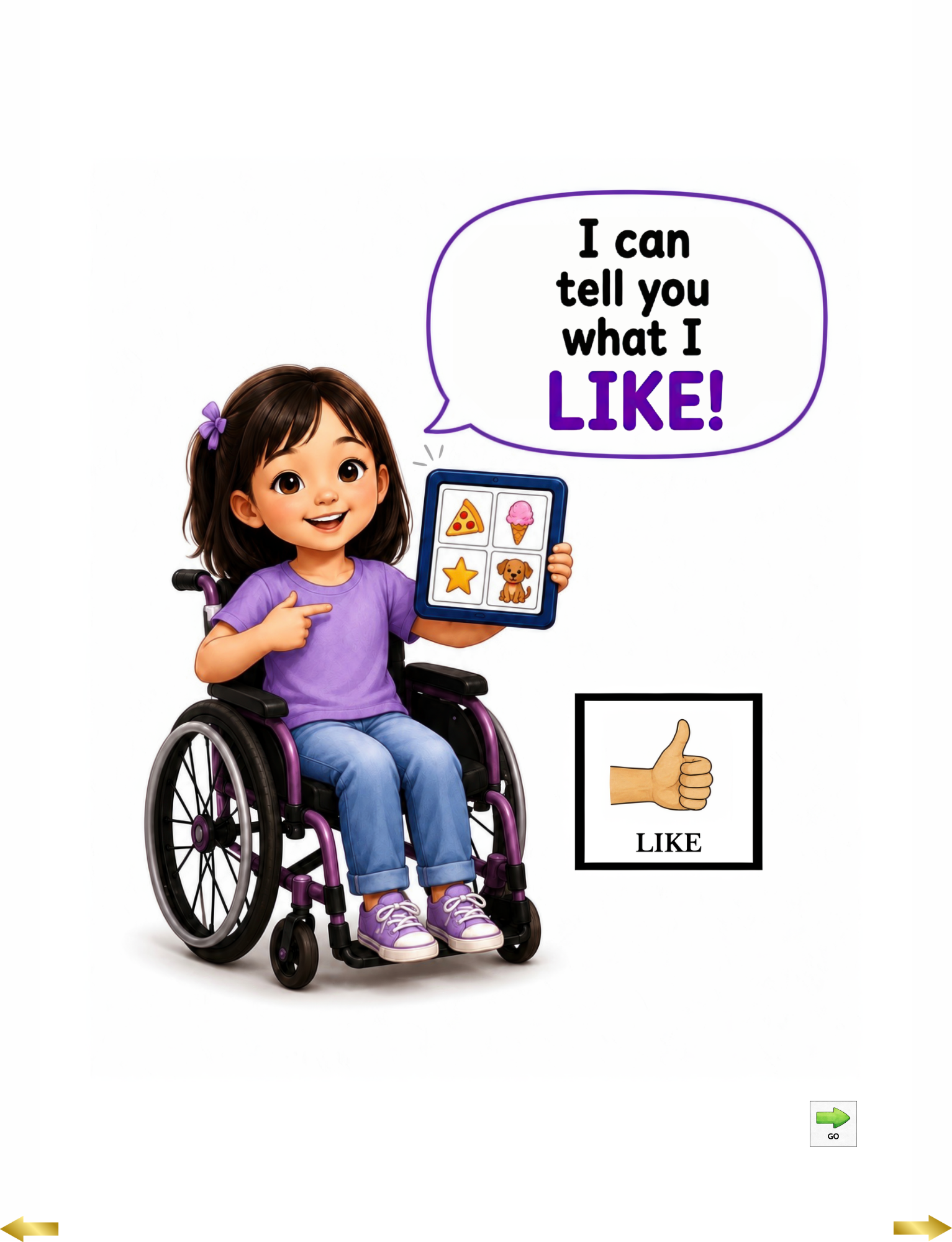
Tap with Tay™ AAC Story Books
Communication-First Learning Series
• AAC Modeling Made Simple
• Shared Reading • Early Communication
Created by Stacey Galvez, MA, CCC-SLP Speech Language Pathologist & AAC Advocate
Stories intentionally written so AAC can be accessed and modeled during meaningful shared experiences, with minimal, manageable navigation designed for both the communicator and their communication partner.
AAC is learned through use—functional communication and motor patterns develop when AAC is used during real shared experiences.
A Peek Inside the Collection
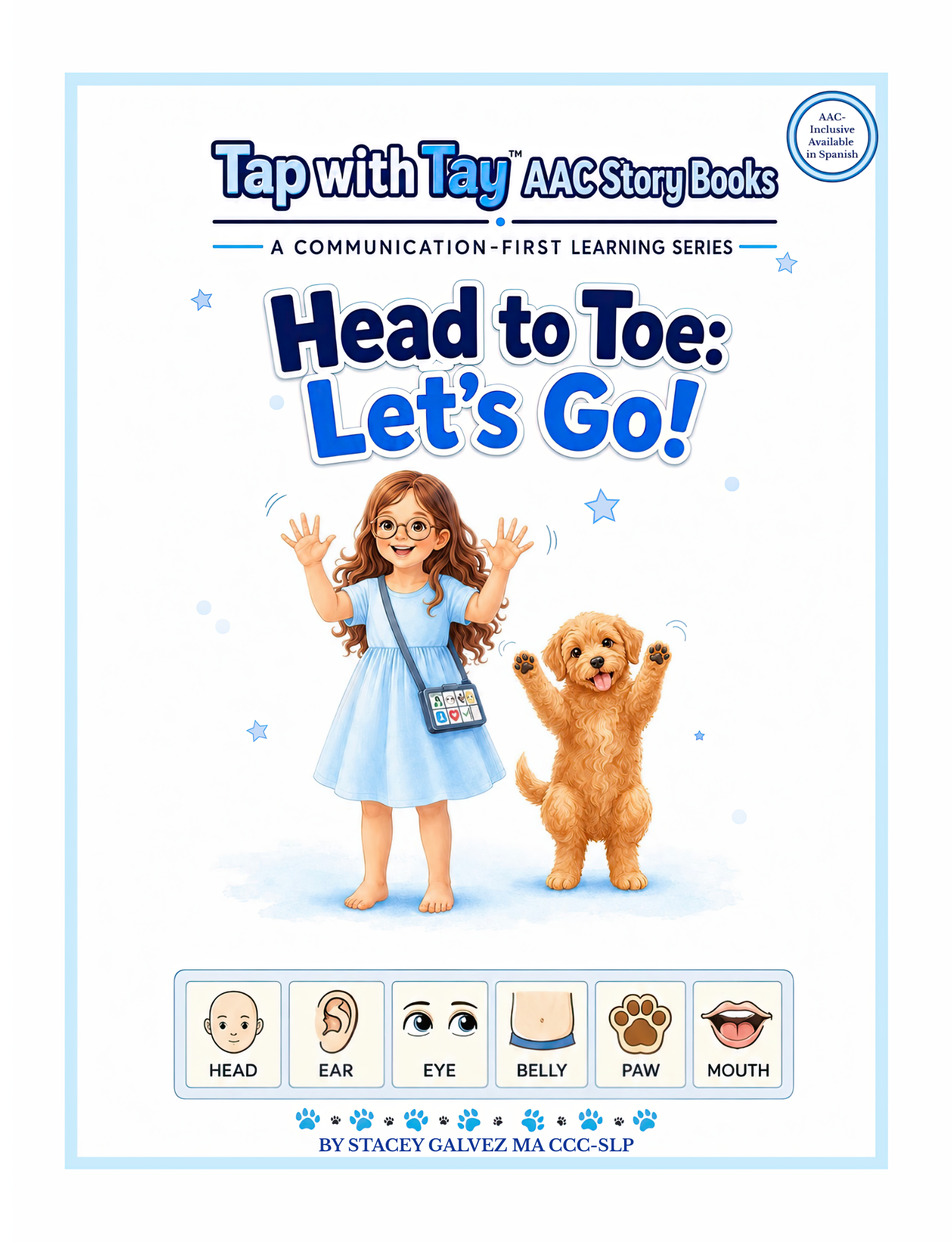
Head to Toe: Let’s Move!
A calm, easy-to-use story that helps children explore body parts through simple, repetitive phrases and fun movements.
Each page names a body part and invites a related action — making it easy for children to listen, move, and participate.
Designed to support communication with minimal navigation, this book makes it simple to model language — whether your child uses AAC or not.
A printable AAC grid is included, but no device is required to enjoy this book.
Available in Spanish
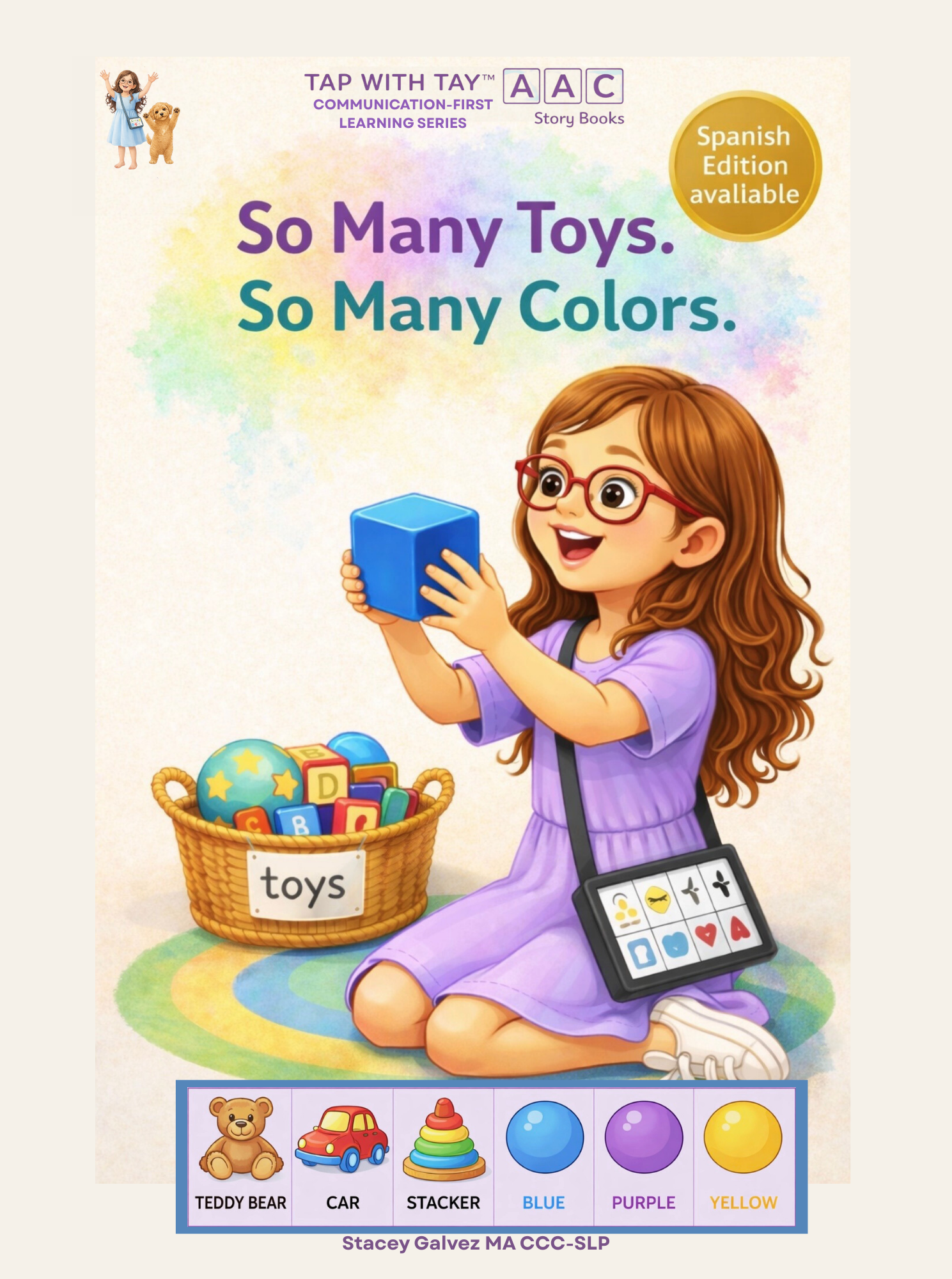
So Many Toys. So Many Colors.
So Many Toys. So Many Colors. is an AAC-inclusive story designed with minimal navigation in mind for high-tech AAC users. Communication partners can model language while staying within the same folder—focusing on toys, colors, or simple actions—without needing to move across multiple pages. Readers may choose to read the story as written or model only what feels manageable. A low-tech AAC grid for toys and colors is included in the back to support communication anywhere.
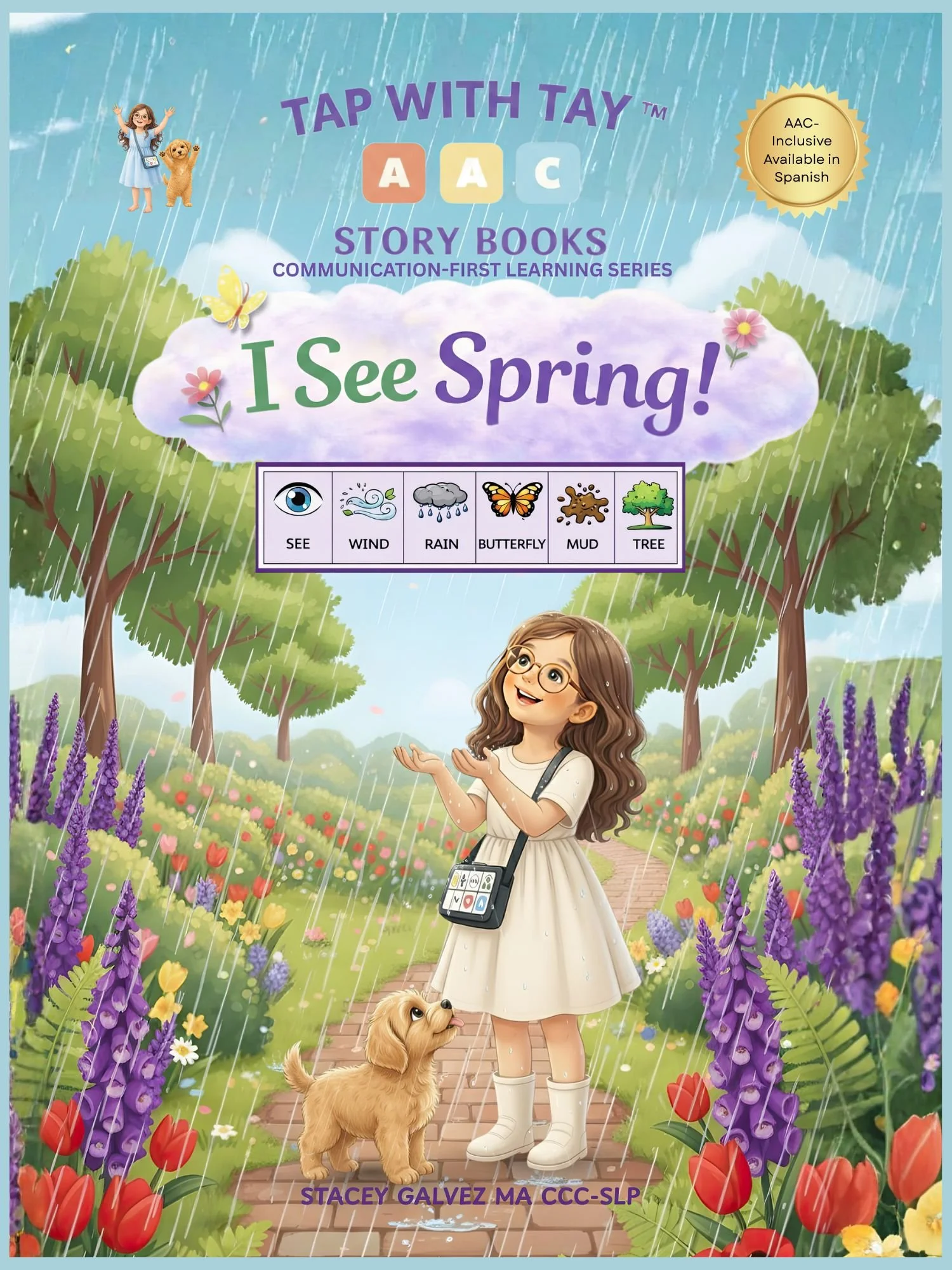
I See Spring!
A gentle springtime story about noticing rain, sunshine, colors, and change — designed to support real communication.
This book pairs simple, repeatable language with AAC icons and GLP-friendly phrasing to make modeling easy for adults and meaningful for children. The repeated phrase “I see…” helps children: Build early language patterns; Participate predictably; Practice AAC use in a natural way; Connect words to what they’re experiencing
Whether you’re a parent, educator, or Speech-Language Pathologist, this story supports communication without pressure — just shared moments and consistent modeling.
Available in Spanish
We do not have to wait for verbal speech to give children access to language.
Provider Note for Therapists regarding Spanish-adapted books:
These books are offered in Spanish-adapted versions to help expand access to communication for children and families who use Spanish at home. They were created with the understanding that a lack of full fluency from a provider should not be a barrier to supporting a child’s language and participation.
The goal of these materials is not to replace bilingual expertise, but to provide accessible modeling opportunities during shared reading and everyday routines. Therapists may choose to model a few meaningful words, support participation, and honor the child’s home language while continuing to collaborate with bilingual colleagues, interpreters, or native speakers whenever possible.
Use these books flexibly and in ways that feel natural and respectful to the family. You do not need to be fluent to model words. Follow the child’s lead and support connection through shared language experiences. Communication access, representation, and cultural respect remain central to ethical AAC practice.
In Spanish, AAC is often called CAA (Comunicación Aumentativa y Alternativa). We use the term AAC in this book to match many communication devices and resources used by families and professionals.
Meet the Author
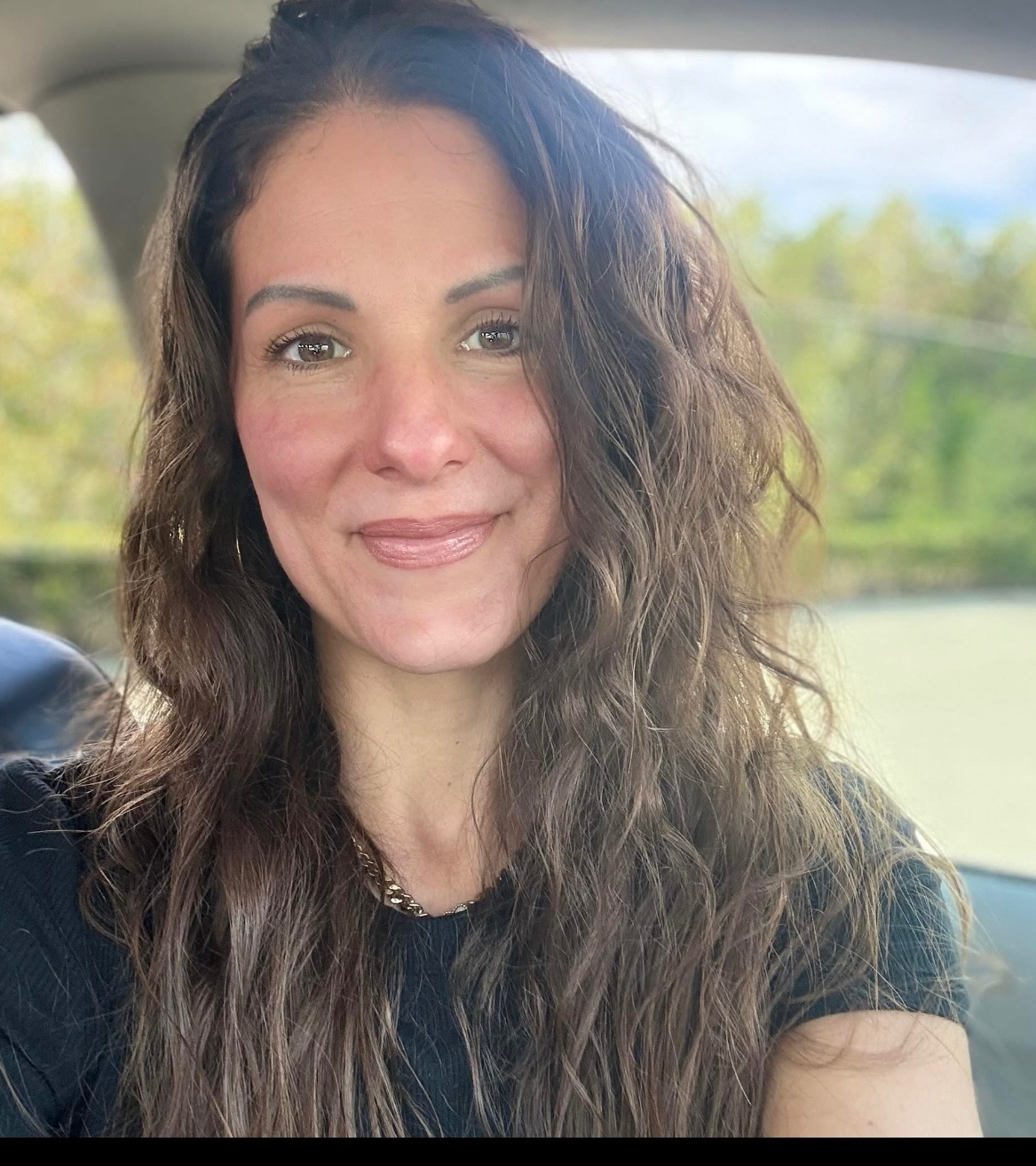
I’m Stacey Galvez, MA CCC-SLP
With experience supporting emergent communicators, AAC users, and autistic children, I blend evidence-based practice with real-life understanding. As both a Speech-Language Pathologist and a proud mom to three amazing daughters including an AAC user, I believe every child deserves to feel represented, heard, and understood.
New Release….
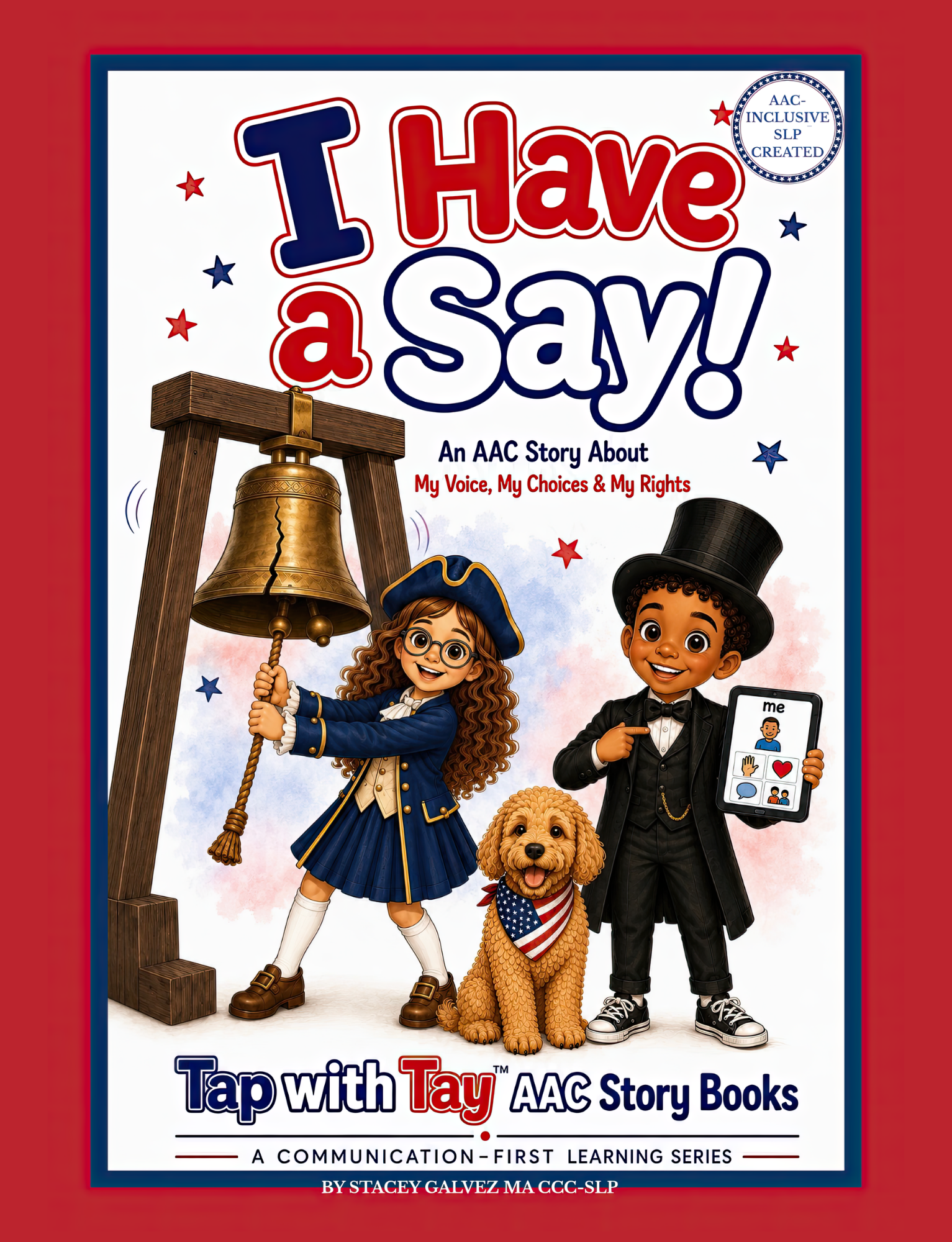
I Have a Say!
An AAC Story About My Voice, My Choices & My Rights
I Have a Say! is an empowering AAC-friendly story that helps children understand that their voices, choices, and feelings matter—no matter how they communicate. Through engaging examples and with simple visual supports, children learn how communication can help them advocate, connect, choose, question, protest, and be heard, their way!